September 2026
Yoga for back pain: gentle exercises that really help
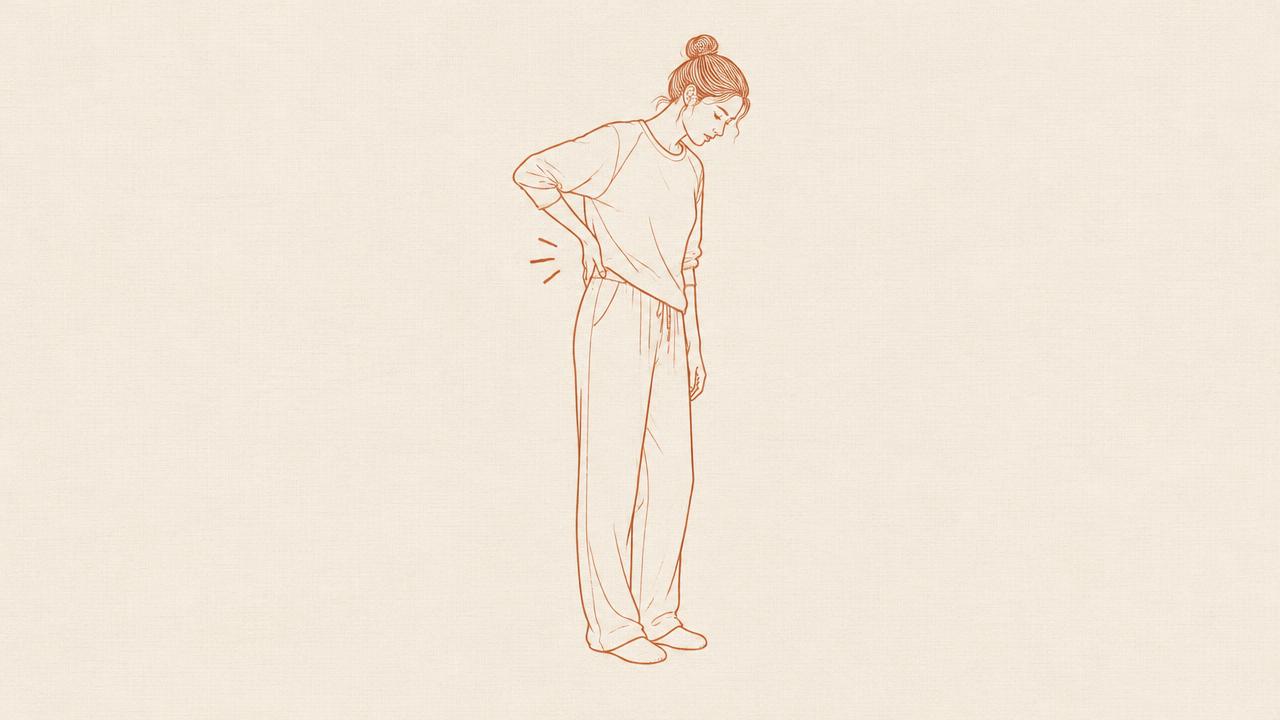
"Lower back pain" is one of the most common reasons people find their way to our door. Long hours of sitting, heavy bags, gardening, sleepless nights — backs take a lot. The good news is that gentle, regular movement is one of the best things you can do for a grumbling back, and yoga is full of exactly the right movements. Here are some of the exercises we come back to again and again.
Start with the spine's own warm-up
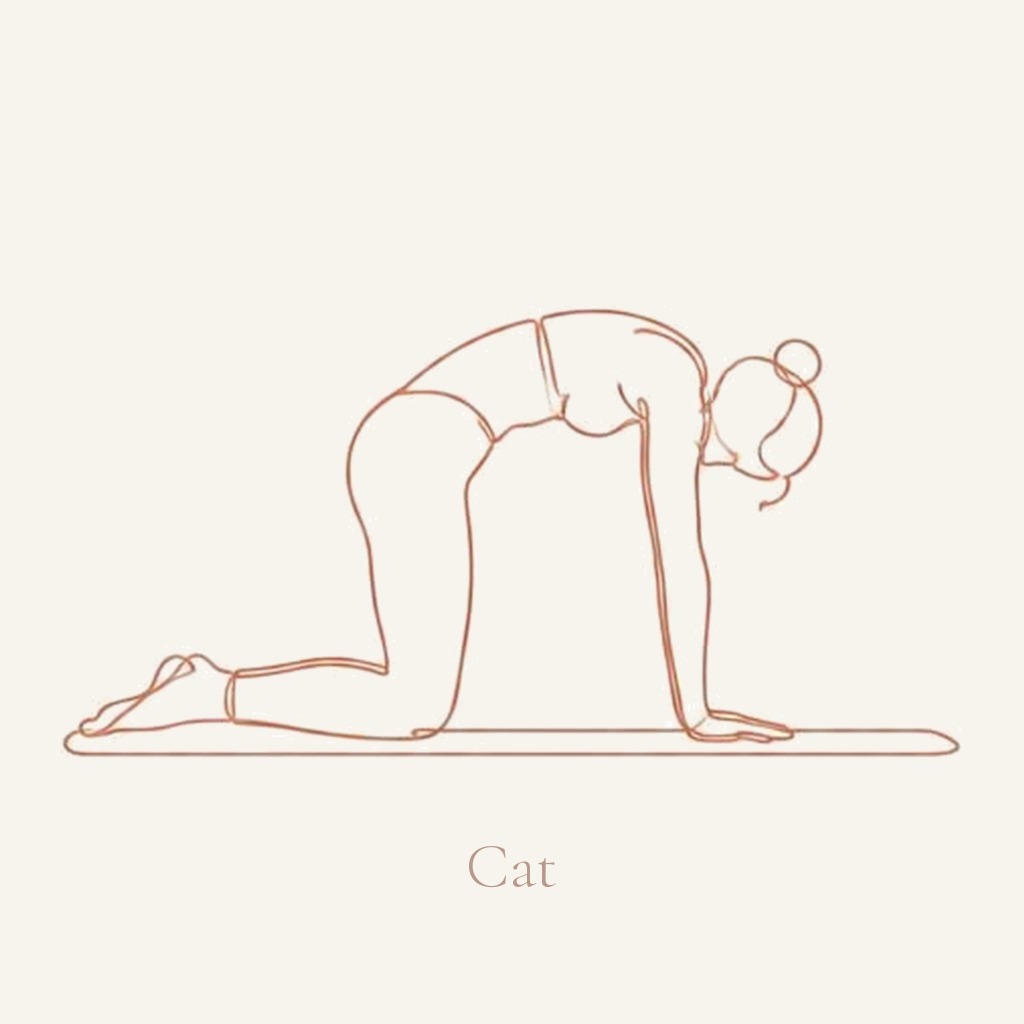
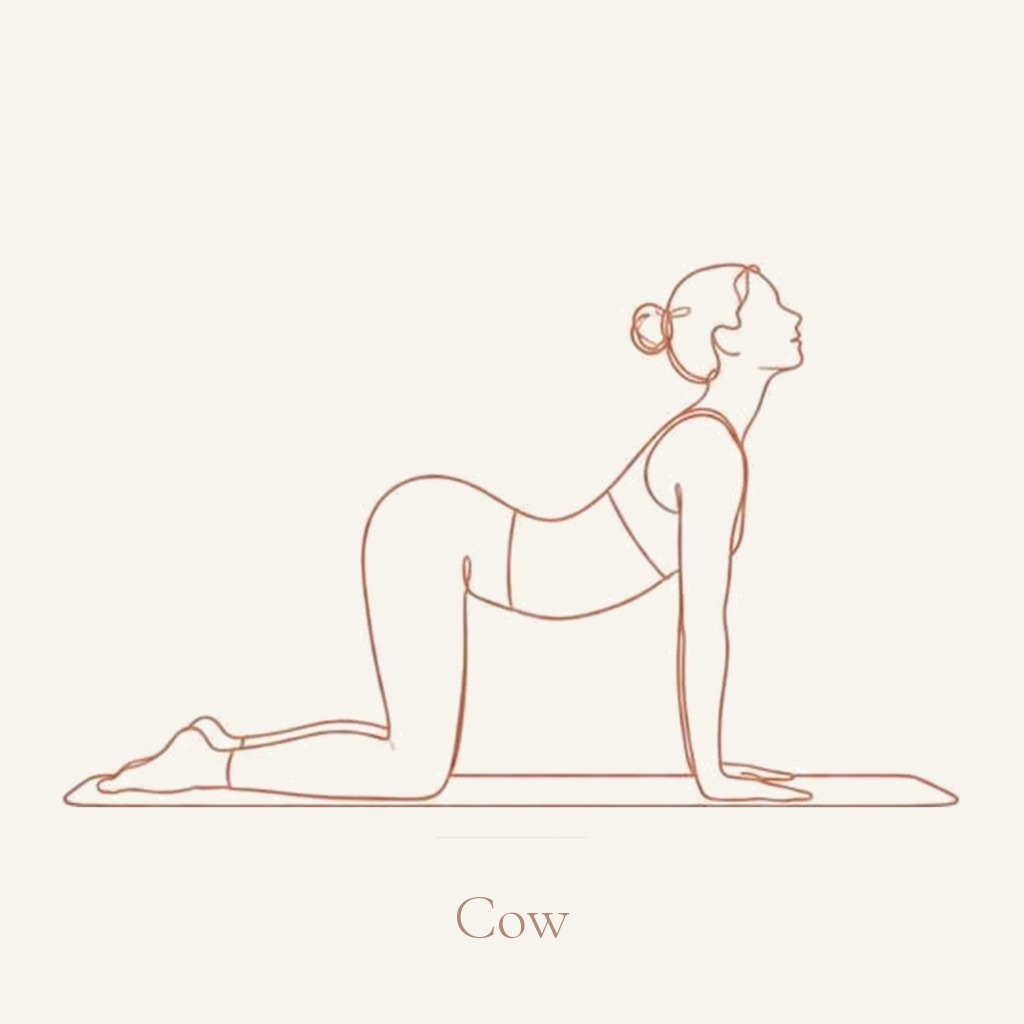
Cat–cow is the first move for almost any stiff back. On hands and knees, you slowly round the spine up towards the ceiling, drop your head and gaze between your legs. Pushing through your hands focus to gently separate your shoulder blades. Now with mindful movement start taking your gaze forwards, allow a dip to appear in your lower back, lifting your chest gently stop with your gaze set towards the ceiling in front of you. t It's not a stretch you force — it's a gentle tide going up and down the whole spine.
The moves we teach most
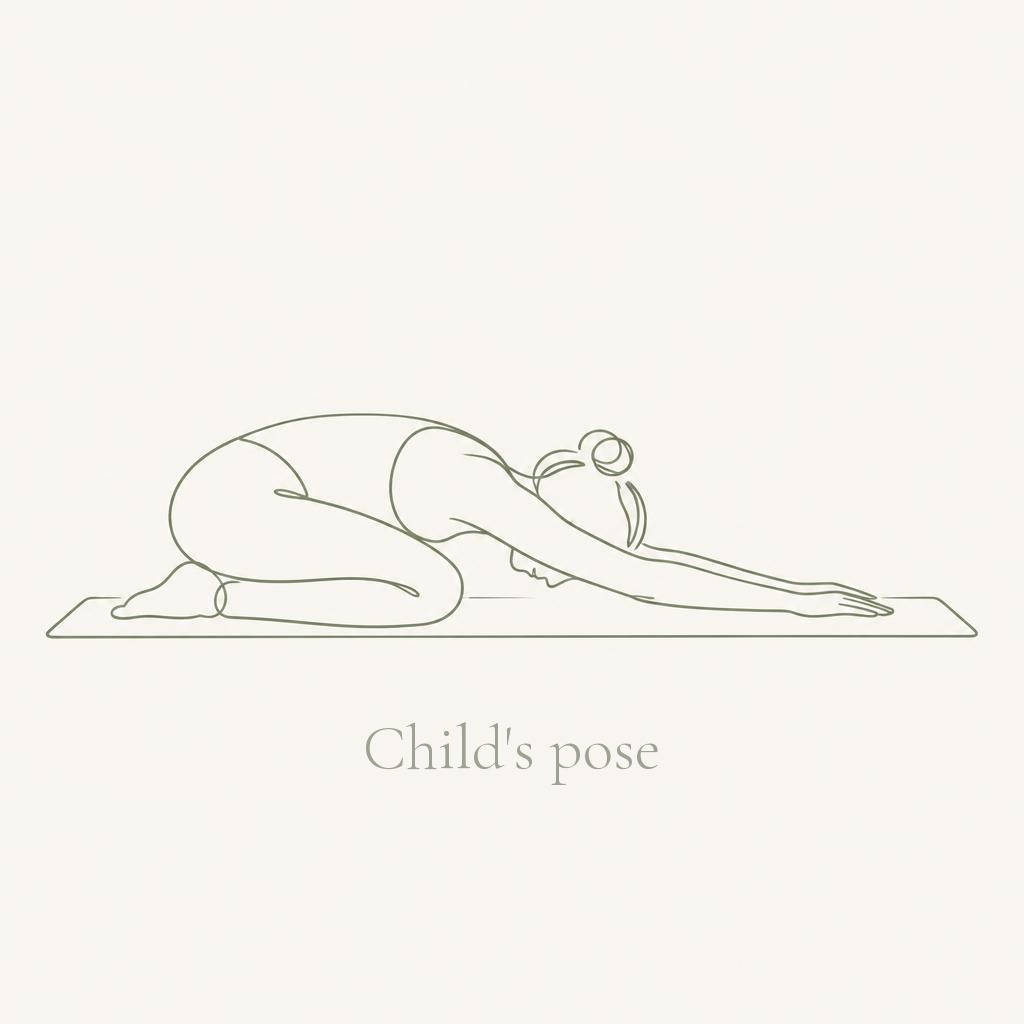
Child's pose — kneeling, sitting back towards the heels, arms resting long in front. It takes the load off the lower back completely and lets everything soften. The most restful shape in yoga, and deceptively effective. If you have any shoulder issues then you have 2 further options for your arms. Bend them creating a relaxed diamond shape in front of you, or take them behind with your palms facing up.
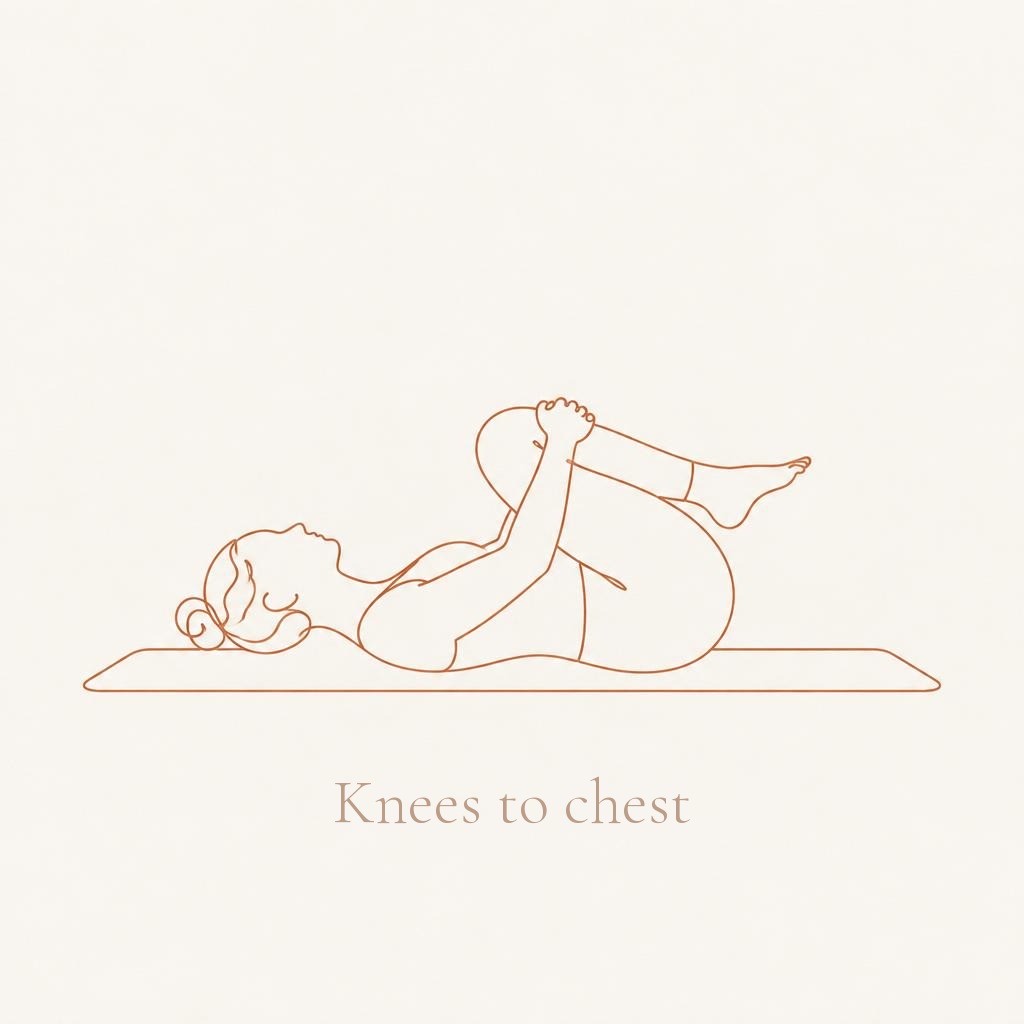
Knees to chest — lying on your back, hugging the knees in. It gently lengthens the lower back and settles the hips. Add a slow rock from side to side and it becomes a little massage.
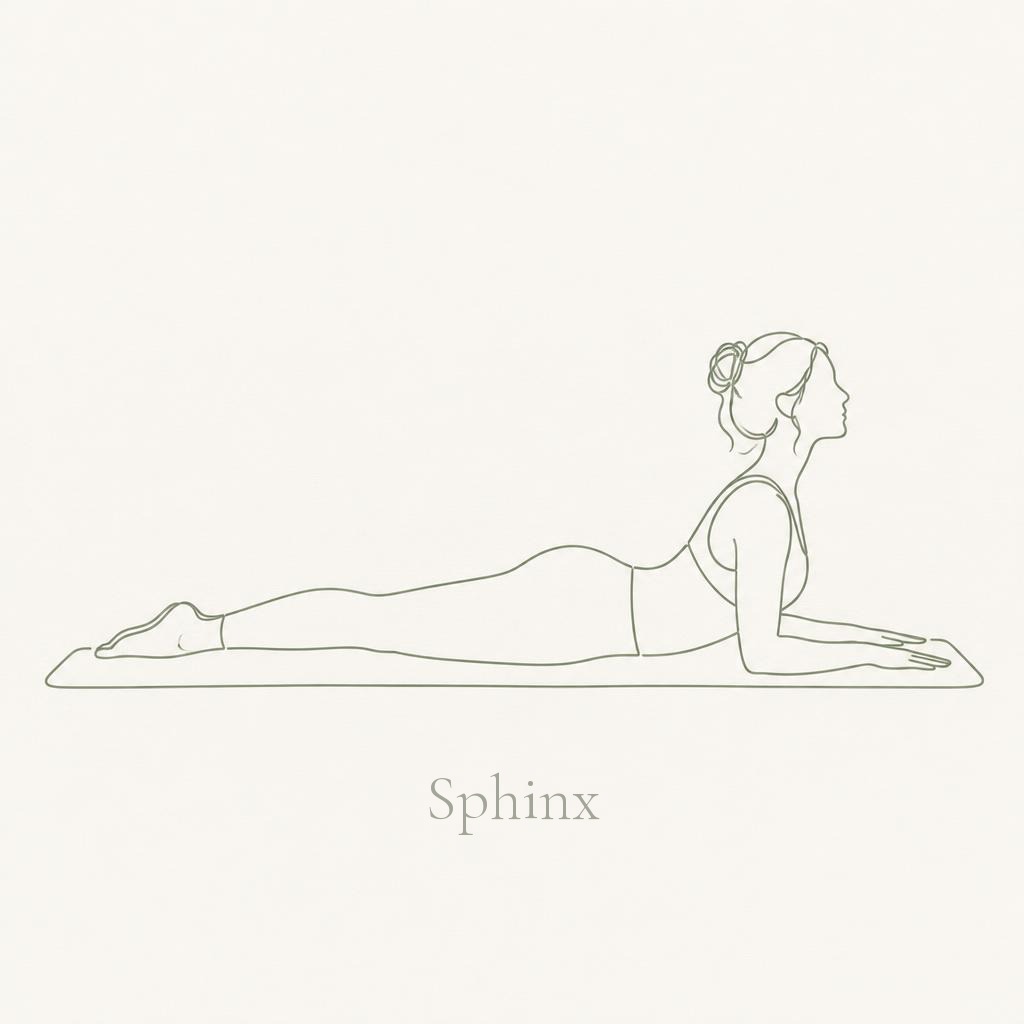
Sphinx or gentle cobra — lying face down, forearms on the floor, chest lifted just a little. Sitting all day folds us forward; this quietly unfurls the spine the other way.
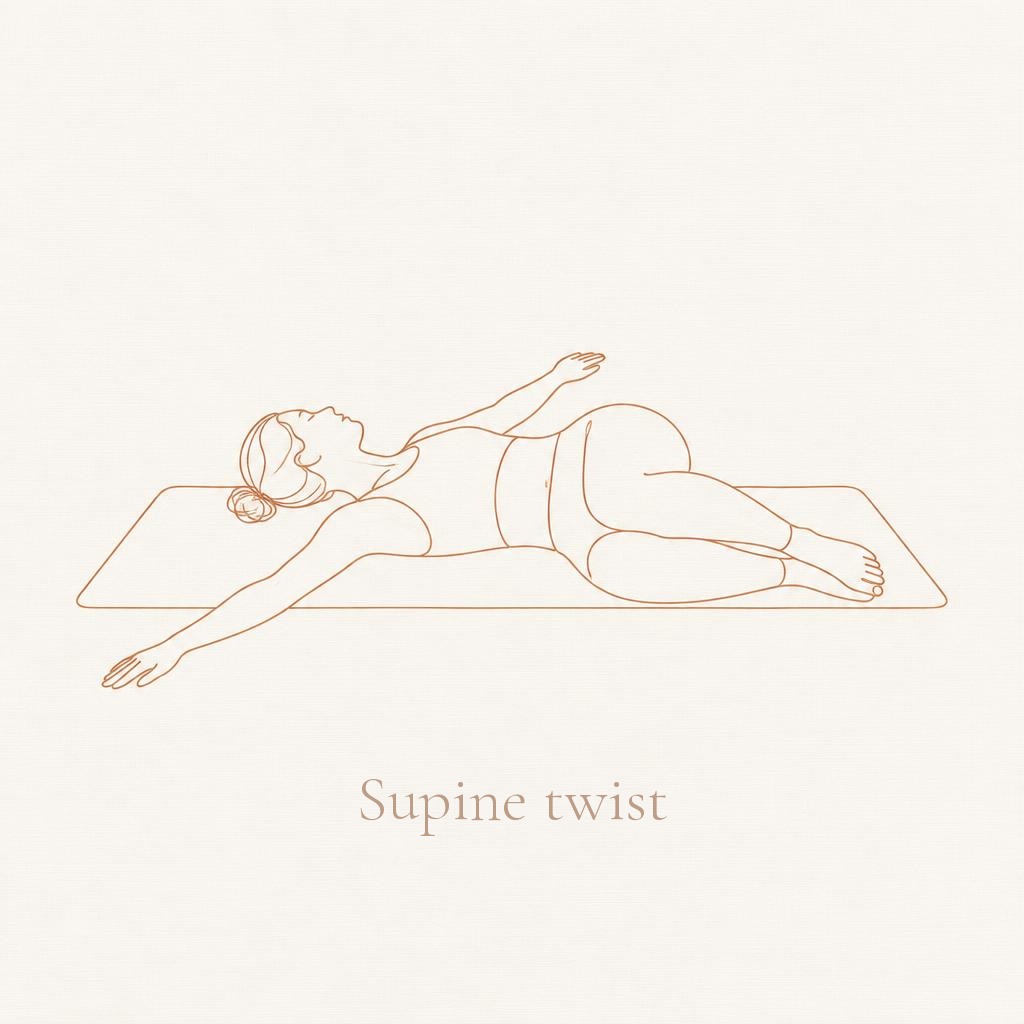
Supine twist — lying on your back, knees bent and let fall gently to one side. It releases the sides of the lower back and the hips, which are often the real culprits behind a tight back.
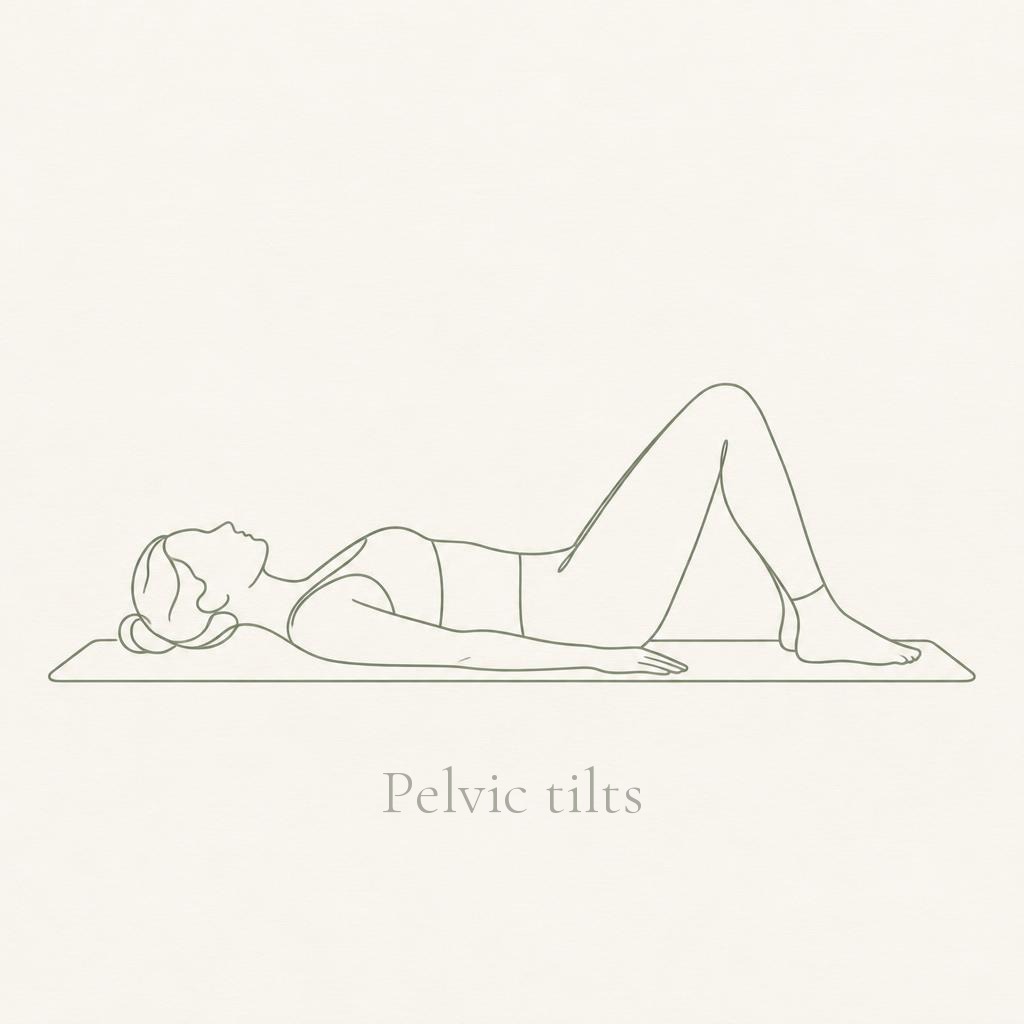
Pelvic tilts — lying on your back, knees bent, feet flat, gently tilt your pelvis to create a big space under your tail bone, then tilt your pelvis in the opposite direction to push your lower back into the mat. Repeat several times. Small, subtle, and wonderful for waking up the deep muscles that support your spine.
Why it works
- Movement feeds the spine. The discs between your vertebrae have almost no blood supply of their own — they're nourished by movement, like a sponge being squeezed and released. A stiff, still back is an under-fed back.
- It wakes up your deep support muscles. Your back isn't just your back — it's held up by the deep core, the hips and even how you breathe. Yoga strengthens the whole supporting cast, not just one muscle.
- It calms the nervous system. Pain and tension feed each other. Slow breathing and long, quiet holds lower the nervous system's volume, and muscles follow.
- It builds consistency, not heroics. A gentle class twice a week beats a heroic session once a month. Backs love rhythm.
Watch points
- Sharp pain is a stop sign. Muscles working, even aching a little, is fine. A sharp, catching or radiating pain is your body saying no — come out of the shape and tell your teacher.
- Avoid fast, deep folding when your back is angry. When it's flared up, favour cat–cow, child's pose and knees to chest, and leave the deep forward folds for another day.
- Keep the knees soft in forward folds. If your hamstrings are tight, forcing a straight-legged fold pulls on the lower back. Bend the knees — nobody is judging.
- Tell your teacher. If you live with a back condition — a slipped disc, sciatica, arthritis, or anything your doctor has named — tell us before class. There are kinder variations for almost everything, and we'll show you yours.
- If pain is persistent or severe, see your GP or a physiotherapist first. Yoga is a wonderful companion to treatment, not a replacement for a diagnosis.
The honest truth
Backs rarely change overnight — they change over weeks of small, kind movements. But they do change. Come and tell us a little about your back and what your days look like, and we'll point you towards the right class; our hatha with flow and yin classes are favourites among people with tender backs, and our one-to-one Pilates induction is a lovely way to build the deep core strength that supports the spine.
Take a look at the timetable and book your first class.
Arden Wellness Hub, Greville Court, Knowle, Solihull — hello@ardenwellnesshub.com