July 2026
Yoga or Pilates? A friendly guide to the difference
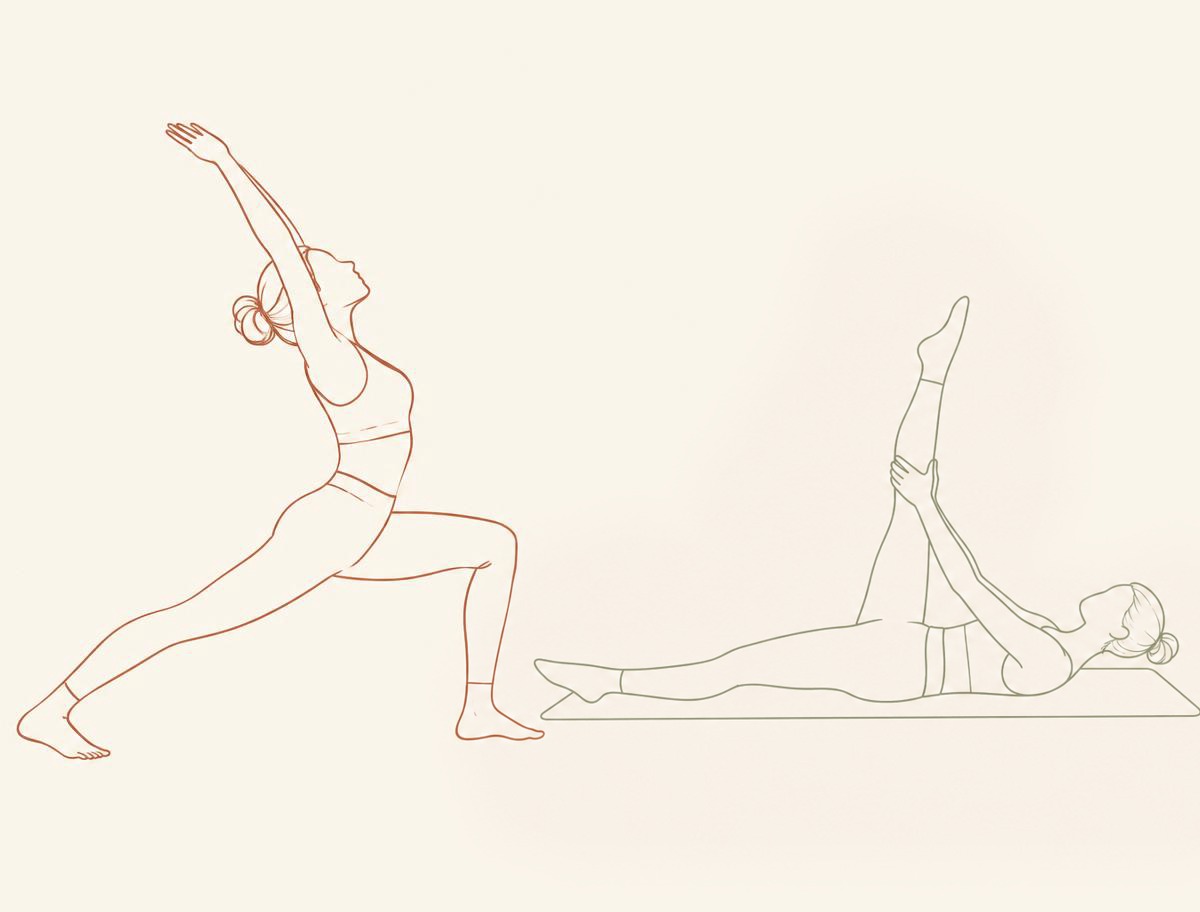
Walk into a wellness studio and you'll usually hear two words more than any others: yoga and Pilates. They look like cousins — people on mats, moving slowly, breathing deliberately — so it's a fair question what actually sets them apart. Here's the honest version.
A different starting point
Yoga is old. Genuinely old — its roots run back thousands of years in India, and the word itself means something close to "yoke" or "join". Movement is only one part of it; breath, stillness and a bit of philosophy are woven through the whole thing. That's why a yoga class might end with you lying on the floor doing nothing at all — and why some classes barely move.
Pilates is young and very specific. It was developed in the early 1900s by Joseph Pilates, who called his method "contrology" — the mind and muscles working together under control. It began as a way of helping bedridden and injured people rebuild strength, and reached the United States in the 1920s. There's no philosophy or meditation attached to it; it's a method, and it's unapologetically physical.
What's the difference in practice?
Pilates is one method. Yoga is a family. One day you're in a flowing class, the next you're holding a single pose for five minutes, and both are yoga. Pilates is far more consistent — the same core principles every time, whether you're on a mat or on a machine.
The breath does a different job. In Pilates you breathe out on the effort, in through the nose, in a rhythm that braces and supports the movement. In yoga the breath is often the point — long, deliberate breathing that slows the nervous system down, and sometimes breathwork with no movement attached at all.
The spine moves differently. Pilates works the spine in small, controlled, supportive ways — articulating and stabilising, with the deep core switched on the whole time. Yoga takes the spine through a bigger range of shapes and holds them longer, spending a lot of time opening hips and chest.
The kit differs. Yoga is usually a mat, maybe a block or a strap. Pilates brings in small equipment — resistance bands, hand weights, rings, balls — and larger apparatus such as the reformer. At Arden we teach mat Pilates, which is where the method actually began.
The after-feeling differs. A good Pilates session leaves you feeling tall, steady and quietly exhausted, in muscles you didn't know you had. A yoga class leaves you feeling longer, looser and calmer in the head. Neither is better — they scratch different itches.
Where they overlap
More than people expect. Both are built on breath and control rather than momentum. Both are low impact and kind to joints. Both teach you to notice your body. Both can be practised at almost any age or fitness level, and both quietly undo the damage of a desk-bound week.
So which should you choose?
- Choose yoga if you want flexibility, stress relief, a calmer head, or a practice with a restorative side.
- Choose Pilates if you want a stronger, steadier core, better posture, or something that supports a sore back, a sport or a golf swing.
- Choose both if you can — they cover each other's gaps rather well.
What you'll find at Arden
Our Pilates is mat-based, mixed ability and aligned to the core principles Joseph Pilates laid out. Small equipment such as resistance bands and hand weights add challenge and variety. Exercises are based on the original 34 Joseph Pilates collection, modified and layered to challenge people to what we call their biting point.
Our yoga borrows from several styles: hatha with flow as a steady all-rounder, yoga sculpt for days when you want more of a workout, yin and restorative for long quiet holds and genuine rest, plus yoga nidra — guided "yogic sleep" that people regularly tell us is the best rest they've had all week.
New to Pilates? Our one-to-one induction is an hour with a Pilates teacher to walk you through the basics — breath, alignment and control — before you join a class. It's a friendly, supportive place to start.
Not sure which is right for you? Email and tell us a little about you — what hurts, what you're after, how much movement you enjoy — and we'll point you towards a class.
Take a look at the timetable and book your first session.
Arden Wellness Hub, Greville Court, Knowle, Solihull — hello@ardenwellnesshub.com